You wouldn’t expect Northfield and the surrounding area to be a hub for sustainable farms, yet you can easily find pumpkin patches, an alpaca ranch, a flower farm, and many CSAs. What makes farmers inclined to move here? This article by Claire Kelloway explores the reasons for the sudden influx of these farms, which surprisingly do not include affordable land or competition, but primarily a strong sense of community and a tendency to help one another.
There is something stately about Woodskeep Orchard. Even in the dead of winter, the blue-gray and burgundy farmhouse sits prominent and proud among rows of dormant apple trees. The bright white trim outshines the snow, letting you know the house is newly built. Approaching along a narrow road flanked by orchards, you forget the surrounding cornfields that command the rest of this southern Minnesota landscape.
Planted in the spring of 2014, Woodskeep Orchard will eventually serve as the source for Keepsake Cidery’s small batch ciders. Together, the orchard and cidery represent Nate Watters’ and Tracy Jonkman’s graft to glass homestead in Dundas, Minnesota.
When deciding between starting a CSA or a brewery, Watters realized he was actually passionate about perennials. He was interested in apples, but he also wanted to grow organic. “Organic apples are hard to grow; a lot of conventional growers will say they’re impossible to grow, that’s not true,” Watters explained, “you get a lot of apples that aren’t fancy great, like a lot. I started thinking about that and I brew and I make wine and ciders, mostly brew, and I was like huh maybe I should try to put these two things together.” And so started Keepsake Cidery.
As we walk around the orchard and cidery on a blinding winter morning, Watters wastes no time jumping into his farming history, and gets a few chores done while doing so. He casually welcomes me into his daily routine, as if we’ve met before. He points to a plot of dark twisted trunks and says, “that’s our baby, I love that orchard, it’s a cool quirky orchard with 30 different varieties of apples. I almost killed myself putting them in, but it’s always going to be near and dear to my heart.”
Behind it he motions, “that’s the garden over there, it’s three-fourths an acre. We grow our own vegetables, all your greens, squash, cucumbers. Everything but celeriac. You can tell Ben I said that, it’s sort of a running inside joke between the farmers here.”
Ben is Ben Doherty of Open Hands farm, a popular Northfield CSA that grows over 270 varieties of vegetables. Doherty and Erin Johnson started Open Hands in 2006. As Watters throws firewood into a large outdoor furnace, he explains how he, Doherty, and Johnson came from the same “factory of young farmers” in Western Massachusetts.
They weren’t there at the same time, they didn’t even work on the same farm, but when Watters and Jonkman moved to South Minneapolis, it wasn’t long before they connected with Open Hands. And almost immediately, Ben and Erin started encouraging Watters to move to Northfield.
Northfield is home to many kinds of farms: a fifth-generation pumpkin patch, a couple of U-Pick berry farms, an alpaca ranch, and many commodity corn and soy growers.
But over the past decade the Northfield landscape has changed. A new breed of young, small-scale, sustainably minded farmers have flooded into Rice and Dakota Counties. Some are coming back to revive idle family lands, while others are first generation farmers looking to follow their passion for land stewardship.
Keepsake Cidery is one of fourteen[1] such farms that have taken root within 12 miles of Northfield in the past seven years. These new farms include 6 CSAs, 3 orchards, 2 livestock operations, one flower farm, and a homesteading artistic community. Seven are within the Northfield city limits, while the other eight are spread between Fairbault, Dundas, Farmington and Cannon Falls.
With so many new farms getting started in quick succession, you’d think there must be affordable land, competition, or some considerable turnover. But after talking with a few of Northfield’s newest farmers, I realized none of these assumptions are true. There is a strong local food network that manages to attract, support, and even create a growing number of organic farmers.
Interactive Map of Northfield’s Farms
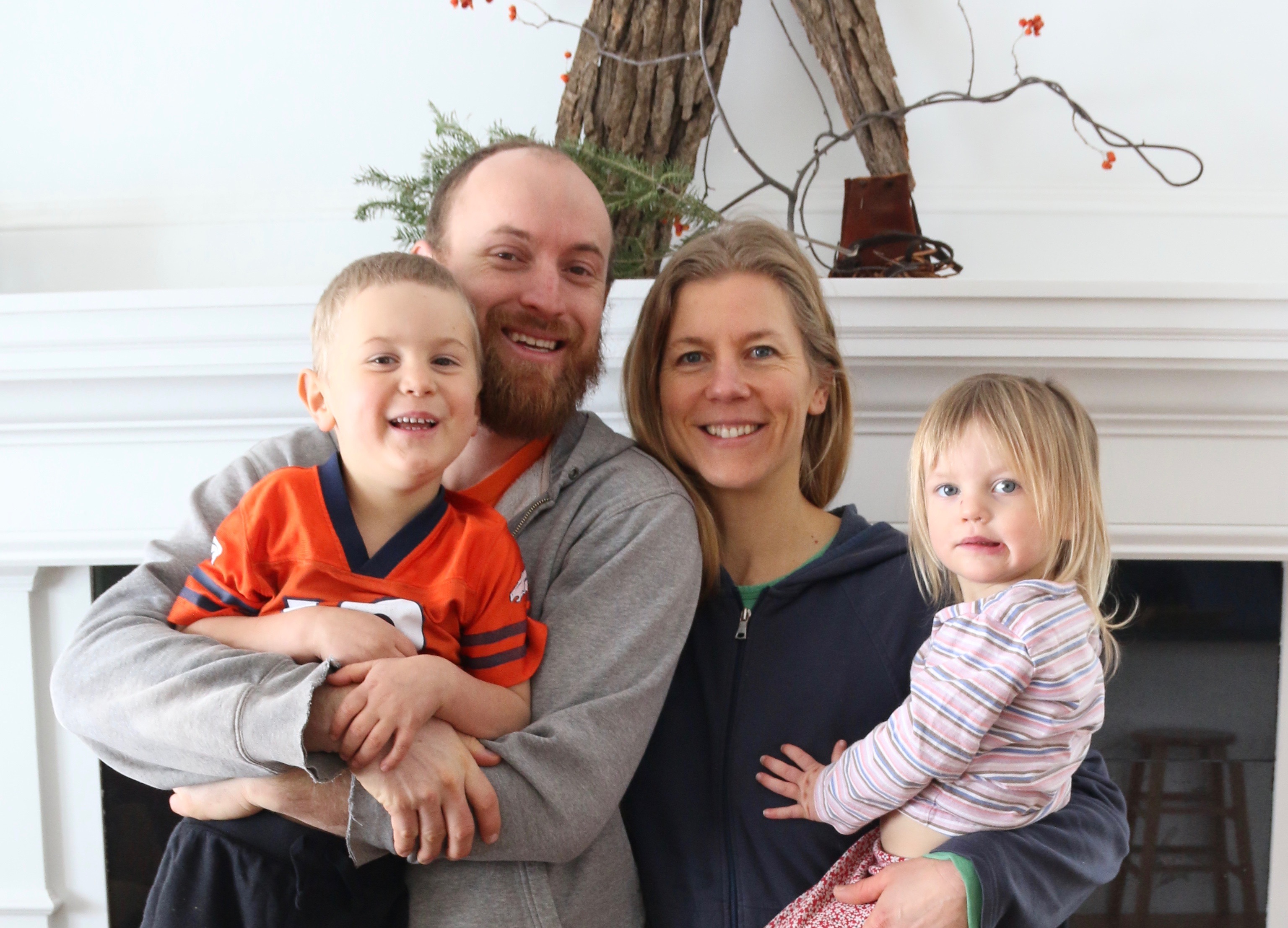
Watters and Jonkman’s two young children, Tristan and Fiona, run around the kitchen, eventually settling at the table with us to finish breakfast and play with Legos. Tracey Jonkman has the same hospitable nature as her husband, and she insists that I make myself comfortable as she rounds up the kids and reads them a fruit and vegetable alphabet book. As he makes a quick breakfast taco, Watters continues, “it’s a really interesting topic that we talk about as a group. It is happening in different places, but it’s weird why it’s happening here, it’s a little different.”
He’s talking about why small-scale farmers, like himself, have been moving to the Northfield area. Watters and Jonkman both feel that Northfield has some intangible attractions as well as more obvious business benefits. But affordable land isn’t one of them.
“Farmland is expensive,” Jonkman says, “there’s been a little bit of buying land from people that are willing to maybe sell at a lower price to have someone come onto the land who’s going to use it in a sustainable manner and nurture it.” She says that’s how Ben and Erin of Open Hands secured their land, however she notes, “it’s sort of a series of fortunate events that allowed that.”
Otherwise, Northfield farmland comes at a premium. In 2014, the average cost per acre for farmland in Minnesota was $4,800. But in southern Minnesota, even after a recent decline in property values, farmland can sell for $8,000, $9,000, even $10,000 an acre. Yet young farmers are still willing to bare these costs to move to Northfield.
“I think it comes down three reasons why small farmers come to Northfield,” Nate explains, “community, dirt, and access to market. So the two tangibles are that this is some of the best soil in the world, but there’s lots of great soil in the world, so the next thing is creating access to market.”
Watters thinks it is worth the up front investment to farm a little closer to a large urban market. “You talk to someone that’s like, ‘I spent nothing per acre in northern Iowa but all my food has to go to the Cities,’ where here we are a short hop and a jump and we’re in the Cities.”
This kind of proximity can save serious time in the long run. Jonkman still works as a physician in emergency medicine, and both she and Nate prioritize spending time with their family. If the drive to the Twin Cities were any longer, it could easily zap what little free time they do have, or require hiring an extra worker.
There’s also something to be said for the considerable market within Northfield. Even though the Twin Cities has six times as many people as Rice and Dakota Counties combined, some farms, like the CSA Spring Wind (est. 2010), sell almost exclusively to Northfield.
In addition to having citizen-interest in CSAs and a local co-op, Northfield also houses larger institutional buyers like Carleton College and St. Olaf. “The colleges buy from a lot of CSA farmers,” Jonkman notes, “that’s a big extra bonus for a small farmer to get rid of a lot of large bulk items.”
Carleton and St. Olaf’s dining halls are run by Bon Appetit Management Company, a food service company with a commitment to sustainable and local sourcing. One Carleton student research project estimated that the two colleges combined spend well over $500,000 each month during the fall buying local produce from farms like Open Hands, SEEDs, Spring Wind, the Main Street Project, and more. For instance, in 2009, St. Olaf bought a third of all Open Hand’s produce.
Still, it is not like farmers across the country are looking at the map and picking Northfield. Watters admits that “we are the weird ones, in that we don’t have a family connection” to Northfield.
At least three[1] of the Northfield area’s newest small farms were started on old family-owned land. Another three were started by Northfield natives on newly purchased land, including Spring Wind, SEEDs farm (est. 2010), and Little Hill Berry (est. 2011). Others, like Johnson from Open Hands, followed family to Northfield.
This suggests that Northfield’s supportive local food community inspires as many native farmers as it attracts newcomers. Take the case of Aaron and Molly Wills, who moved to Northfield in 2006 with no intention of farming, and went on to open Little Hill Berry, a certified organic U-Pick blueberry farm.
Aaron Wills became interested in food and agriculture after doing the Peace Corps in Bulgaria. Through the chatter at Northfield’s token college-town café, Goodbye Blue Monday, Wills told me that “I literally feel like I had my first real tomato when I was in the Peace Corps, a tomato that wasn’t just placeholder.” There’s no doubting Wills’ passion for food grown with care; he grins just remembering this tomato revelation, adding, “I feel you just really know when you eat a real tomato.”
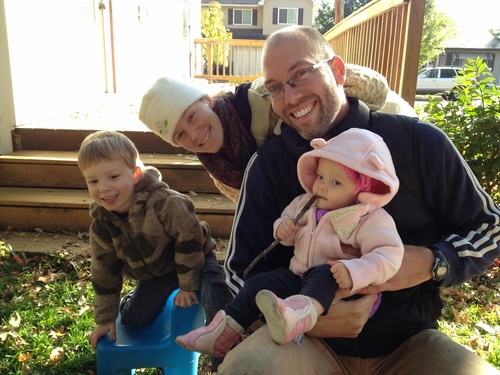
Photo courtesy of Little Hill Berry
Aaron’s wife Molly McGovern Wills grew up in Northfield and teaches 2nd and 3rd grade at Prairie Creek Community School. Aaron followed her to Northfield and became a program manager for the Cannon River Watershed Partnership, where he still works with flexible hours. At first, Wills was simply interested in food and where it came from. But after befriending local farmers, Wills said, “it was just really inspiring to see what they were doing, they were just growing this amazing food, and I started to think, well, why couldn’t I do that? That would be really fun.”
Wills witnessed a remarkable transformation in Northfield’s food system. When he first moved to Northfield in 2006, the main CSA’s were Big Woods farm, started in 1992 by the Hougen-Eitzman’s, and Thorn Crest farm, established sometime before 1990. Open Hands was just getting started, as well as a diverse livestock, egg, and vegetable farm called Simple Harvest Farm Organics (all are still around today).
But in just three years (between 2009 and 2011), the Northfield area gained 7 new CSAs, a cherry orchard, a goat cheese maker, and a test sight for regenerative chicken raising (part of the statewide Main Street Project). Northfield evolved from just a college town with some sustainable agricultural to a veritable hub of mostly young, small-scale farmers.
So when it came time to look for land, the Wills were faced with a tough decision. “My parents own some farmland where I grew up and a lot of my relatives own farmland, so there’s just all this access to land that we would have had,” Aaron explained, “but it would entail moving to those communities and it was just like, why would we ever want to leave Northfield? So it was interesting: from a business perspective we didn’t have very much money, it would have been much easier to go and rent land from my parents for instance, but it was more attractive just from a quality of life perspective to stay here.”
This more intangible “quality of life” is the key third trait that Nate Watters also mentioned in his Northfield trifecta. It’s not just that the Northfield or Twin Cities markets can support a lot of farms: the farmers in Northfield and their customers actively support each other.
“Some people kind of joke that it’s a little incestuous, just because we’re all friends,” Aaron Wills said, “people who don’t live here are just like ‘aw, the Northfield contingent of small farmers.’”
For instance, when the Wills needed to plant fifteen hundred blueberry bushes, other farmers came to help. Or when they first installed their irrigation system, Aaron’s neighbors showed him the ropes. Wills admitted “I would have had no idea. I probably could have figured it out, but it would have taken me a week and it took us a morning.”
A lot of farmers also share equipment, especially important yet expensive technology that only gets used a few times a year. For instance, Keepsake Cidery co-owns a trailer with Open Hands, a mulch spreader with Little Hill Berry, and even an entire orchard with Spring Wind.
But more than physically or economically, this group of farmers helps each other emotionally. The supportive social network was a major factor in convincing Nate Watters to come to Northfield.
“Social infrastructure is really important, it’s a really hard job to do and if you can’t ever so often get together with group of like minded farmers and let your kids run around and get muddy and talk about how hard it is to farm it’s really difficult,” Watters explained, “if you don’t feel like you have a support group, you don’t feel like someone’s got your back, you’re either just a much stronger person than me or you’re crazy.”
Watters and Jonkman try their best to not get overworked or overstressed, but that can be a tall order during peak seasons. “There are some that will be out from break of dawn, or sometimes earlier, to running the tractor with lights on at night for much of the early part of the season,” Jonkman said, “you just run yourself ragged.”
Such is the nature of farming; it’s not the type of work that has a clear start or end point. Whether physically or mentally, farmers are always on the job. A 2011 study on eight alternative farms in the Pacific Northwest argued that small-scale organic farming relies on a certain amount of “self-exploitation” to keep products affordable[1]. Farmers can easily put in 80, sometimes even over 100, hours a week of unpaid labor to keep their operations afloat. So to maintain any semblance of work-life balance, a group of like-minded peers going through similar struggles can make all the difference for farmers.
All the farmers I talked to also prioritized their family and children. The farmers at Keepsake Cidery, Spring Wind, Open Hands, Little Hill Berry, and Waxwing Farm all have children under five, which can be a demanding job in and of itself.
This supportive social network of growing farm families was one of the main draws for Michael and Kristi Pursell of Late Bloom Flower farm, who moved from Minneapolis to Northfield in January, 2015.
The Pursells are the self-proclaimed “new kids on the block,” in Northfield. They came from Growing Lots urban farm, a veggie CSA in the Seward neighborhood of South Minneapolis. While the Pursells loved their Minneapolis community and their neighbors loved Growing Lots, they started to reevaluate their urban ag lifestyle after having their second child.
“We were sort of looking longer term and the urban farm was not where we wanted to be in five or ten years,” Kristi said, “farming is hard, but urban farming has several additional layers of challenges, and once we had a family you just can’t work 80 hours a week, I’m sorry. I mean farming is long hours just the extra layers of politics and zoning and all these extra rules. We had three different landlords for the three plots we farmed. So thinking about our family and thinking about at the end of this what do we have, and the idea is fairly old fashioned, but maybe we’ll have this farm that we can offer to our children, or have something to show for building up the soil and creating these systems and this environment that even if our boys don’t want to do it, it can be handed down to someone else.”
So when the Pursells thought about leaving Growing Lots for a larger homestead, Northfield stood out as an obvious choice. The two are St. Olaf grads, and many of their farming friends were either from Northfield or recently started farms there.
“Our people are here and they’ve been trying pretty actively to get us to move down for at least five years probably,” Kristi said. Coincidentally, Kristi also used to work with Molly McGovern Wills at Wolf Ridge environmental learning center ten years ago, before she even met Michael.
“Our kids are going to grow up with friends who know exactly how hard March is when everyone is trying to start seeds, and greenhouse season, and sleeping in the hoop house to make sure it stays warm enough”
There was something very comforting about the idea of raising their children in a community with other farming families. “Our kids are going to grow up with friends who know exactly how hard March is when everyone is trying to start seeds, and greenhouse season, and sleeping in the hoop house to make sure it stays warm enough,” Kristi said, “it’s like my kids not being the only one at day care that’s like ‘papa’s a farmer,’ that was kinda weird in Minneapolis, and now it’s not a dime a dozen but it’s more understood and part of that is the smaller community of Northfield.”
Wills, Watters, and Jonkman also talked about how helpful it is to be surrounded by other new parents. Wills said that the farmers take shifts watching a big group of kids. Jonkman mentioned that they’ll often use “sleepovers” as an excuse to bring families together and hang out after the kids go to sleep. Just as farmers enjoy a their close peer network, they hope their kids will also benefit from having farm friends.
Nonetheless, the move was a risk. The Pursells had a close connection with their neighbors and customers at Growing Lots, but if they were serious about getting land in Northfield, they needed to get into the area and have an ear on the ground. Kristi Pursell explained, “with the prices as they are, once something goes on the market it’s too late, we’d be maybe priced out.’”
So after Kristi landed a job in Northfield (at the Cannon River Watershed Partnership where Aaron Wills works), the Pursells sold Growing Lots with the intention of working on friends’ farms until they found land.
How they managed to quickly start Late Bloom Flower farm is another testament to the Northfield farmers’ network. Back at Growing Lots, a few Twin Cities florists had approached the Pursells about growing chemical-free flowers. Kristi and Michael built a strong floral clientele and enjoyed the project, and just as they were moving to Northfield they got a request to ramp up flower production.
The Pursells told their friends about the opportunity, and Aaron Wills offered to rent them an extra field that he once rented to Spring Wind.
“It just worked out, we had a series of opportunities present themselves and followed what we like to do and also what we were able to do,” Michael said, “flowers are something you can do high value on relatively little acreage which is still appealing to us at this moment because we’re renting less than an acre and that’s our whole farm now and it will be for the next couple of years as we look for land.”
Like the other farmers I talked to, the Pursells are clearly thinking holistically and long term. Northfield isn’t a place where they’re coming to farm for a few years. Many are here to create a permanent homestead.
“If you ask any of these farmers why they’re doing what they’re doing and why they’re doing it where they’re doing it, at some point in that conversation if you go far enough down that road you’ll find that everybody’s thinking very intentionally about their quality of life and that’s a phrase that will come up specifically,” Michael Pursell noted, “we’re looking at quality of life for ourselves, we’re looking at quality of life for our families, and we’re all ultimately trying to raise quality of life for others through the things that we produce.”
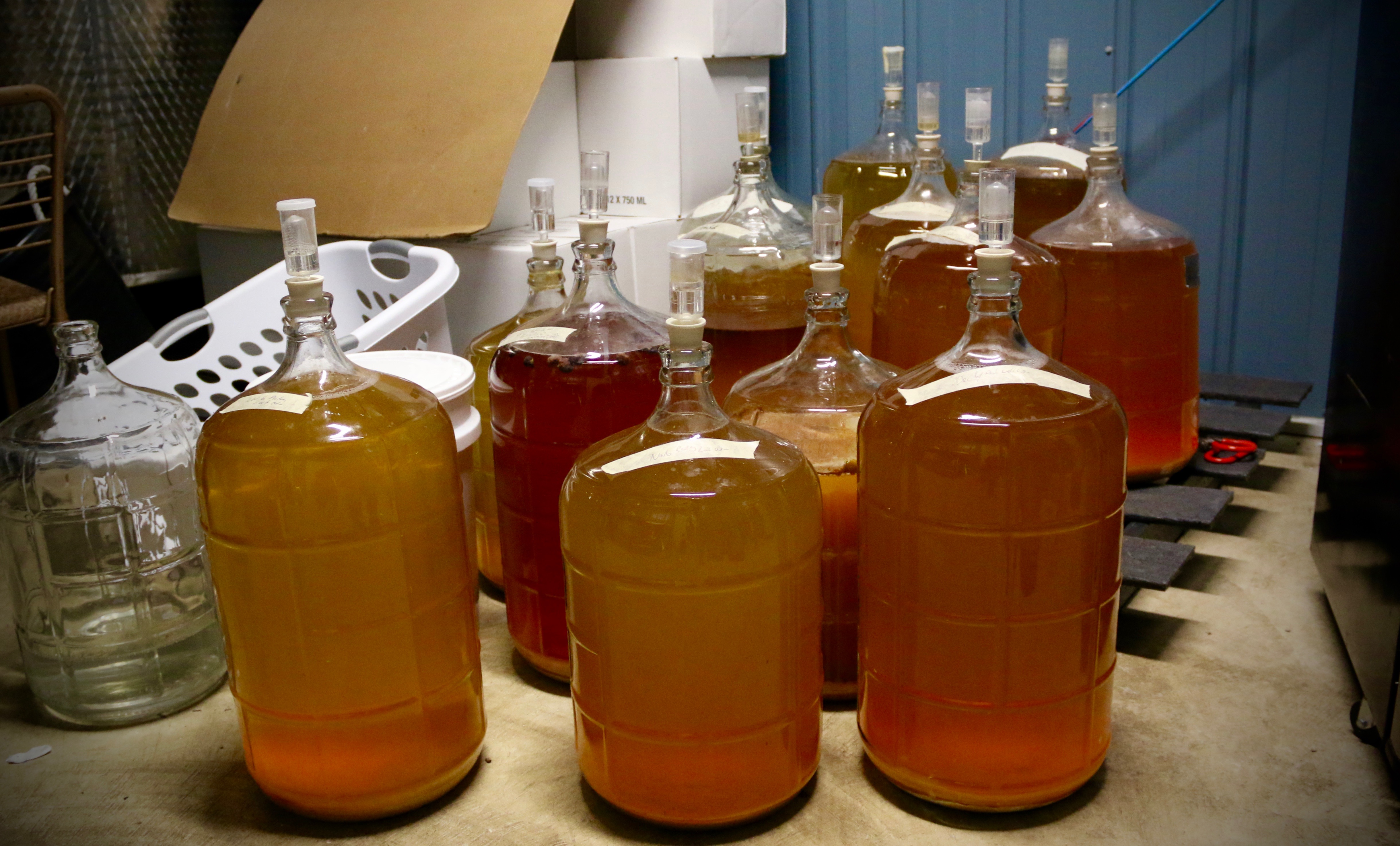
A variety of ciders from Keepsake
But it’s not like Northfield farmers are the only ones who value a supportive community and peer network. Across the country there are many similar hotbeds of newer, small-scale organic farms bunching around the edges of major urban markets.
Similar examples near the Twin Cities would be Amery, WI where a wealthy couple has made land available at subsidized rent for new farmers committed to land stewardship. Or Decorah in northern Iowa, which serves the Twin Cities and, like Northfield, houses a small liberal arts college, Luther. And just northeast of Decorah is Viroqua, WI, home of Organic Valley, Midwest Organic Services Association (MOSA), and an Organic Certification Agency (Natures International Certification).
So what, if anything, sets Northfield apart?
Of course every town has a distinct community, but Nate Watters felt there was something special, more cohesive, about Northfield. He said “I’ve talked to other places where there’s a really strong small farmer community, but outside of that there isn’t, and that’s difficult when you’re like an island, but not in Northfield.”
In other words, the “Northfield contingent of small farmers” has considerable support from outside their clique. For instance, Watters says his conventional neighbors have been just as gracious with sharing equipment as his organic friends. Once when he borrowed a compost spreader from an older farmer, Watters asked how he could repay him, and the farmer told Watters to give some money to a younger conventional farmer who needed help with his rent.
“There’s something that almost gets me teary eyed about how amazing the non-organic farmers are, and I don’t like putting a name on them, that’s what Northfield has taught me, we’re all in this together,” Watters said, “I was talking to someone that y’know does a lot of conventional work, and he was talking to me about how important it is to take care of the baby turtles. Suddenly it hit me like I’m not talking to some y’know hippie sierra club, like my usual crew, I’m talking to a conventional guy, and that’s awesome, he cares about turtles just like I care about turtles, and that’s Northfield, Northfield cares about the turtles too.”
Despite some disagreements, many Northfield farmers are able bond over the common desire to support a stronger agrarian economy. And Watters suggests that the Northfield community has a shared environmental awareness.
There’s also evidence that Northfield’s encouraging and nurturing culture extends to farmers outside this “core group” of farming friends, conventional or otherwise. I managed to find at least one other sustainably minded farmer who came to Northfield without knowing the Open Hands et al. network.
Wil Crombie is videographer turned farmer who grew up between Northfield and Faribault in Cannon City. He moved to southern California to get his film degree, and traveled the country after graduation. Then in 2012 he moved back to his family’s land to start the Organic Compound, a community project in self-sufficiency, environmental education, and life-skills training. Wil and a handful of rotating homesteaders run a 3-acre garden that feeds their community. They also host gardening workshops, concerts, even hide tanning classes at the Compound.
But at first, Crombie was hesitant to reach out to other Northfield farmers. “I was sort of afraid of the locals,” Crombie admits, “I just kept to the arts and music scene in the Twin Cities, and those people would just come for a day and then leave, so for years I was hesitant to open that door to the locals, but now I sort of feel like a fool.”
This past year, Crombie met Reginaldo Haslett-Marroquin of the Main Street Project, a program that trains new farmers in poultry-centered regenerative agriculture. Together, they’ve been researching how to implement some Haslett-Marroquin’s farming systems on Crombie’s 40 tillable acres.
“The connection with Reginaldo and the Main Street project has been the catalyst for realizing that I can be a farmer,” Crombie said, “having local community leaders like Reginaldo and the Main Street Project and just witnessing all of the farms in Northfield and hearing about them is really empowering, it can really make you think, hey this is possible, I can be a farmer too, even though I’ve got soft hands from editing on a computer for the last ten years.”
Thus, Northfield’s encouraging community has the ability to attract like-minded farmers and inspire new ones. This is especially evident in Northfield’s successful student-run farms, including the Carleton Farm, STOgrow (the St. Olaf organic farm), and the Mirasol Cooperation (run by the Northfield Youth Peoples Action Coalition), who all receive mentorship and advice from existing Northfield farmers.
There are also more professional launching programs like the SEEDS project, or the Social Entrepreneurship, Environmental Design, and Stewardship Project, which makes land available for environmental stewardship, sustainable agriculture, and entrepreneurship projects, such as the Main Street Project and SEEDS farm.
Additionally, Northfield’s food scene does not feel competitive. Kristi Pursell mentioned that “it’s amazing how people have been very welcoming and inclusive, its not like ‘oh my gosh don’t come here that’s competition there’s another farm’ which I have just found to be totally astonishing.”
But her instinct does make you wonder, will there ever be a point when things do become competitive? How many more veggie CSAs can this small town support?
The farmers I spoke with had mixed opinions. Wills of Little Hill Berry said, “somebody could start another farm and do a CSA but they’re starting to take customers from other people, so I think in CSA world it probably is starting to be maxed out.”
On the other hand, Watters thinks it’s important to focus on growing the CSA market. He admitted that, “if you focus on what we got, ya, then we’re going to hit the ceiling soon, but usually it’s 2-5% of consumers that go for a CSA share, that’s a dinky tiny percentage, even if you put two more percentages on that and made it 4 or 6 or 8 or something like that, that’s hundreds of people who now need a CSA.”
And there’s no evidence that Northfield couldn’t continue to grow. Michael Pursell has talked to his friends with CSAs, like the farmers at Open Hands and Spring Wind, and he said “they don’t feel constricted. They have said that if we wanted to start a veggie CSA that we could sell the shares, they haven’t had any problem filling their CSAs to date, so my sense is if we really wanted to grow veggies we probably could.”
“Northfield is going to be well served and the Twin Cities are going to be well served if they can get everything that’s able to grow in our climate locally and a seasonally and sustainably, so it is actually really good for everybody on the whole to be thinking about filling niches and unmet needs”
Still, for farms starting up right now there does seem to be a trend towards specialization. Just look at Keepsake Cidery, Little Hill Berry, Cherry Leaf Farm, and Late Bloom flowers: none are veggie CSAs.
But in many ways, this is intentional and yet again, collaborative. Michael Pursell explained that “we want everyone who wants veggies to be able to get veggies, but as people start to think more broadly about what’s available locally and what’s in season and what’s grown with care, then I think part of what it means to build that movement is for people to have other choices too. Northfield is going to be well served and the Twin Cities are going to be well served if they can get everything that’s able to grow in our climate locally and a seasonally and sustainably, so it is actually really good for everybody on the whole to be thinking about filling niches and unmet needs, that’s at least some part of the decision for why we are growing flowers.”
On the whole, Northfield farmers are still actively encouraging more people to join them. But only time will tell if consumers will continue to demand more CSAs and niche local food choices. At present, there are some examples in the US, especially on the coasts, of places that did become almost too attractive for small farms. For instance the Seattle area, which is a “known hotbed,” according to Aaron Wills, might be oversaturated with sustainable ag.
“In those places, it is really competitive, there are so many farms that it’s reached that point where you should probably really think about if that’s a good choice, because you’re going up against all these really established farms and you’re just trying to figure stuff out and get started, it’s pretty tough,” Wells pointed out.
He admitted that “maybe it will never get to that level” in Northfield. But, he did say “that’s interesting to think about like in 10 years if we had this conversation again would it be like ya it’s a great place to farm as long as you’re an established farm, its not a great place to start a farm anymore.”
Several of the farmers I spoke with also mentioned co-marketing as a key way to connect with customers. Established CSAs, like Open Hands, might offer add-ons to their CSA shares like cider from Keepsake Cidery or flowers from the Pursells. This type of helpful endorsement might be harder to get for new farmers from outside the existing Northfield clique. And as Michael pointed out, he “couldn’t cross market a veggie CSA with our veggie CSA friends.” You either need to fill a niche, or grow the market.
Still, there’s a good reason to believe that the demand for local and ecologically-sound food will continue to grow. Since 2006, the number of farmers markets has increased by 180%, the number of regional food hubs is up 288%, and the number schools in the USDA Farm to School Census is up 430%. Nationally, local food sales have grown from $4.8 billion in 2007 to nearly $7 billion in 2012, and this growth is projected to continue. In fact, the demand for organic food is growing faster than domestic supply.
And there is something to be said for the very intentional effort from farmers and eaters alike to build more local agriculture in Northfield. Whether it’s current farmers recruiting friends, agricultural training programs supporting beginners, conventional neighbors lending a hand, or college dining services taking in any and all local produce, Northfield is full of people going out of their way to build a new generation of alternative agriculture.
As Nate Watters put it, “we sell more cider in the Northfield area than our big stores up in the Cities because the people say we’re dedicated to you, our cider CSA is like majority Northfield and Cannon Falls, people are dedicated, if that hard work and that dedication wasn’t there it wouldn’t work. That being said, just like farming, there is a certain part out of your control, so after you’ve done that hard work, you put the seed in, it’s going to want to grow naturally it’s going to want to do its thing as long as it’s fed and watered, and that’s what’s happening.”
[1] Ryanne Pilgeram. “The Only Thing That Isn’t Sustainable . . . Is the Farmer”: Social Sustainability and the Politics of Class among Pacific Northwest Farmers Engaged in Sustainable Farming.” Rural Sociology, pp. 375–393, 2012.
[1] Sogn Valley, The Organic Compound, and Dragonfly Hollow
[1] Little Hill Berry est. 2011, Spring Wind est. 2010, Main Street Project est. 2011, SEEDs est. 2010, Late Bloom Farm est. 2015, Laughing Loon Farm est. 2012 (recently moved), Cherry Leaf Farm est. 2009, Keepsake Cidery est. 2014, Organic Compound est. 2012, Singing Hills Goat Dairy est. 2009, Waxwing Farm est. 2012, Dragonfly Hollow Farm est. 2011, Sogn Valley Farm est. 2015, Abundant Vine CSA est. 2015





Recent Comments